
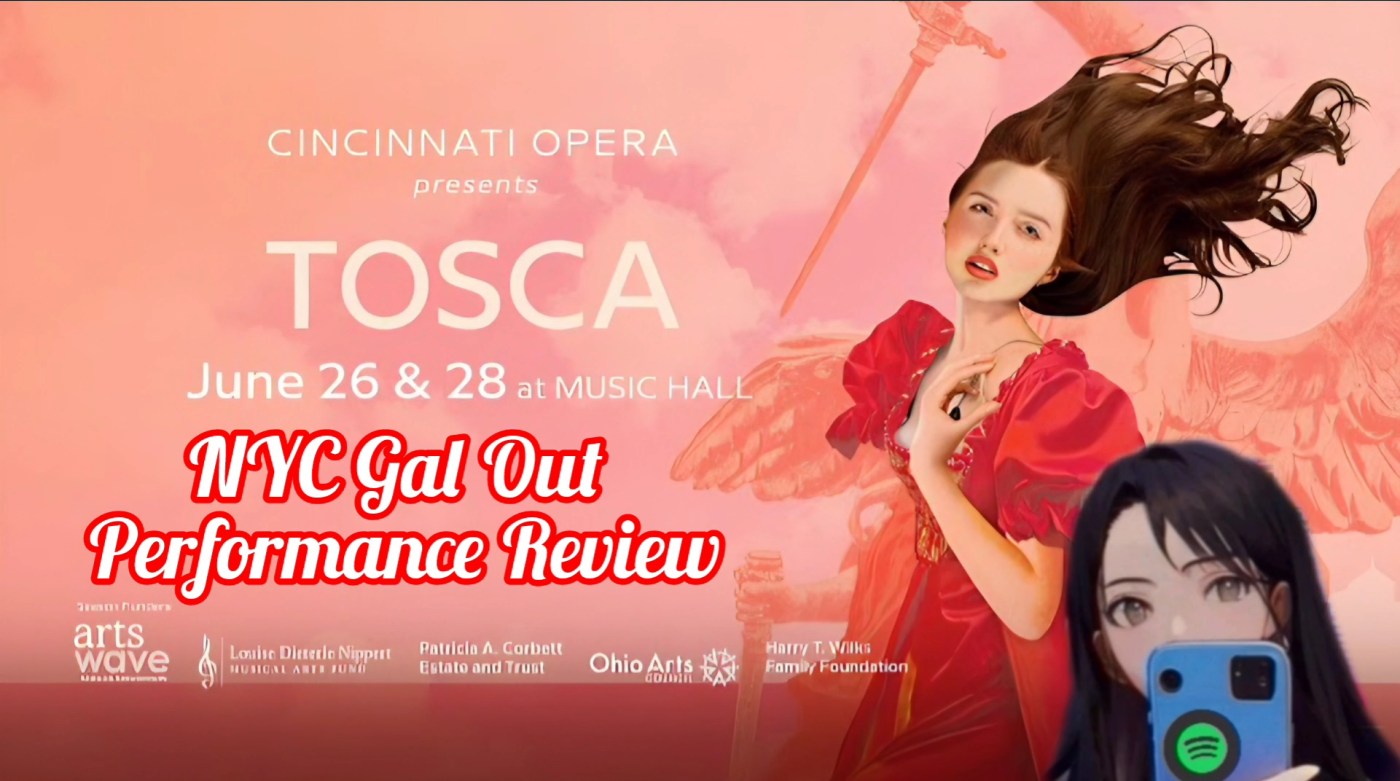
FREE tickets to select performances* are available for a limited time for students in grades 7-12 (and 2025 graduates), thanks to a very generous donor. Tickets may be reserved at any time online, or by phone or in person during box office hours (M-F; noon-5PM). A valid ID or proof of eligibility must be presented to pick up tickets in advance or at Will Call before the performance.
*2025 Summer Festival performances eligible for FREE tickets for high school students:
Tosca • Thursday, June 26 & Saturday, June 28
Fiddler on the Roof • Friday, July 25 & Sunday, July 27
I went to the opera for the very first time, and I took my eldest daughter. The seats were phenomenal (in the orchestra section), and it was completely free! Our seats retailed individually for $216 per seat. It was an amazing opportunity to experience this, especially since I most likely would never have spent that kind of money — maybe I would have bought nosebleed seats in the gallery area, but I definitely wouldn’t have paid over $430. We’re very grateful for the amazing experience. ♡
We saw the Saturday night performance on June 28, 2025 at 7:30PM. It was held at the Cincinnati Music Hall, in their Springer Auditorium, and with the performance featuring the Cincinnati Symphony Orchestra and the Cincinnati Opera. The opera was sung in its original Italian, with projected English surtitles.
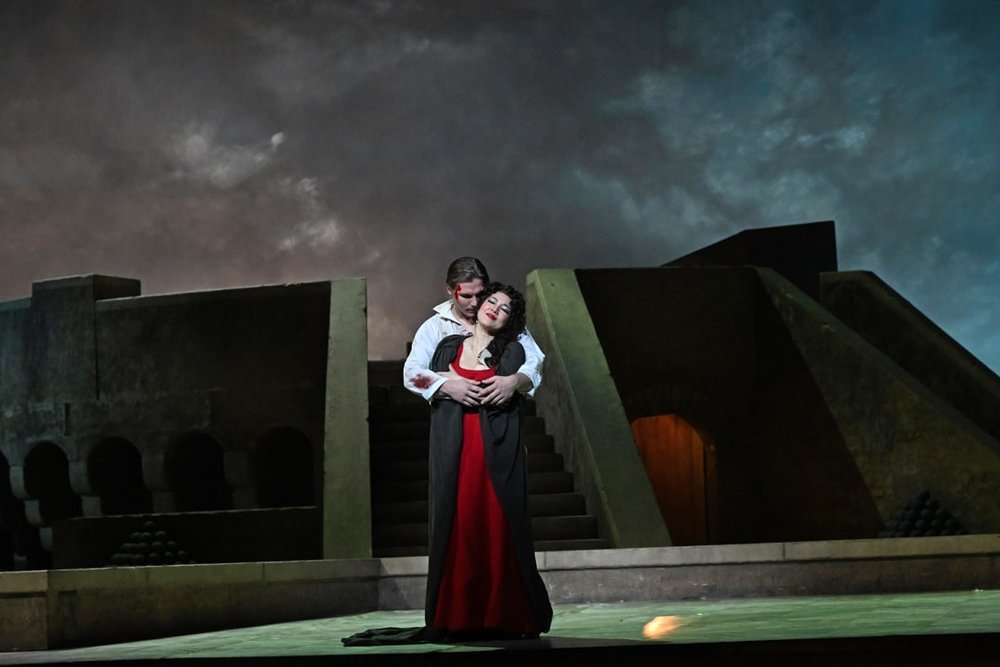
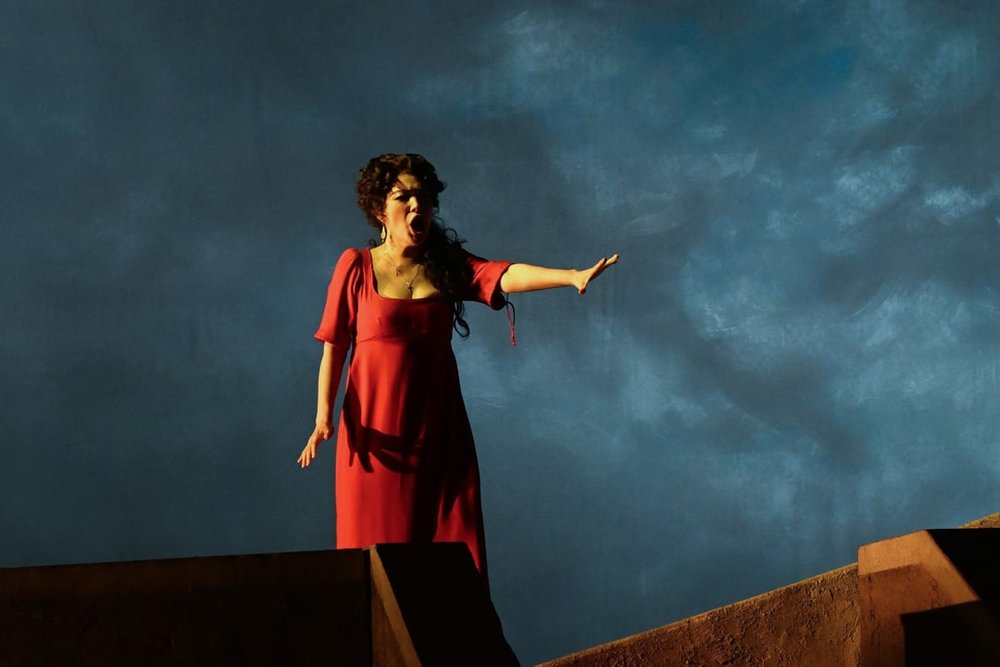
There was only three stage settings: the church, Scarpia’s chamber, and the castle tower. My favorite part was Act II, and my favorite scene was when Tosca kills Scarpia; my favorite stage setting was Act III, the castle tower. Everything was so vibrant and exciting. The costumes were impressive, and the whole production was amazing; especially the performers, including the orchestra. The auditorium was completely filled. The opera lasted about 3 hours, with two intermissions, and there were three acts.
Synopsis: Floria Tosca is a jealous singer who suspects her lover of being unfaithful, but he’s really helping a friend who is an escaped political prisoner. This misunderstanding leads to a series of misfortunes caused by Baron Scarpia, the chief of the secret police. The opera is set in Rome during the Napoleonic Wars.
ACT I (the church): Rome, 1800. Angelotti, a political prisoner, has escaped from Castel Sant’ Angelo and takes cover in the Church of Sant’ Andrea della Valle where his sister, the Marchesa d’ Attavanti, has left him the key to the family chapel. He is discovered by the painter Mario Cavaradossi, a liberal sympathizer, who is painting an altarpiece. His portrait of Mary Magdalene is inspired by the Marchesa, whom he has observed frequently in prayer for her brother. When the singer Floria Tosca, Cavaradossi’s lover, arrives, she recognizes the blue-eyed Magdalena as none other than the Marchesa herself. Tosca jealously insists that the figure be made to look more like her dark-eyed self and leaves the church. Soon after, a cannon shot from the prison announces Angelotti’s escape, and Cavaradossi hurries him away to hide in his country villa.
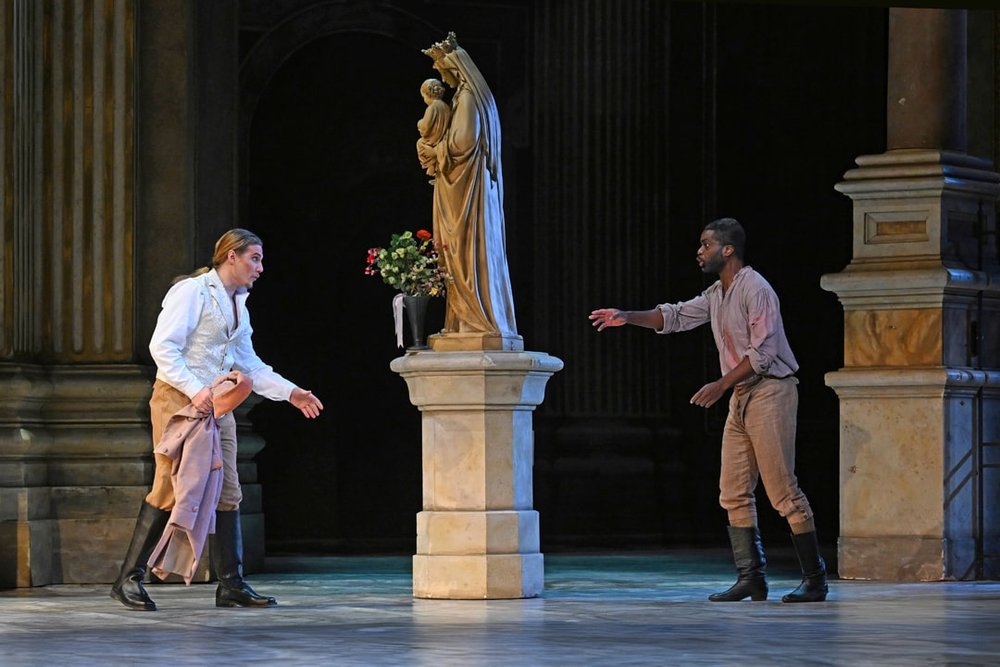
The Sacristan tells the choir of the reported defeat of Napoleon at Marengo, to be celebrated with a High Mass. Their jubilation is interrupted by Scarpia, the feared chief of police, who arrives with his men to search for Angelotti. Scarpia finds a fan with the Attavanti crest, part of a disguise left for Angelotti by his sister, as Tosca returns to tell Mario that she will sing for the Queen that night at the Palazzo Farnese. Scarpia uses her jealousy to sow seeds of doubt about her lover and the Marchesa; as Shakespeare’s Iago used a handkerchief to manipulate Othello, he will trap Tosca with the Marchesa’s fan.
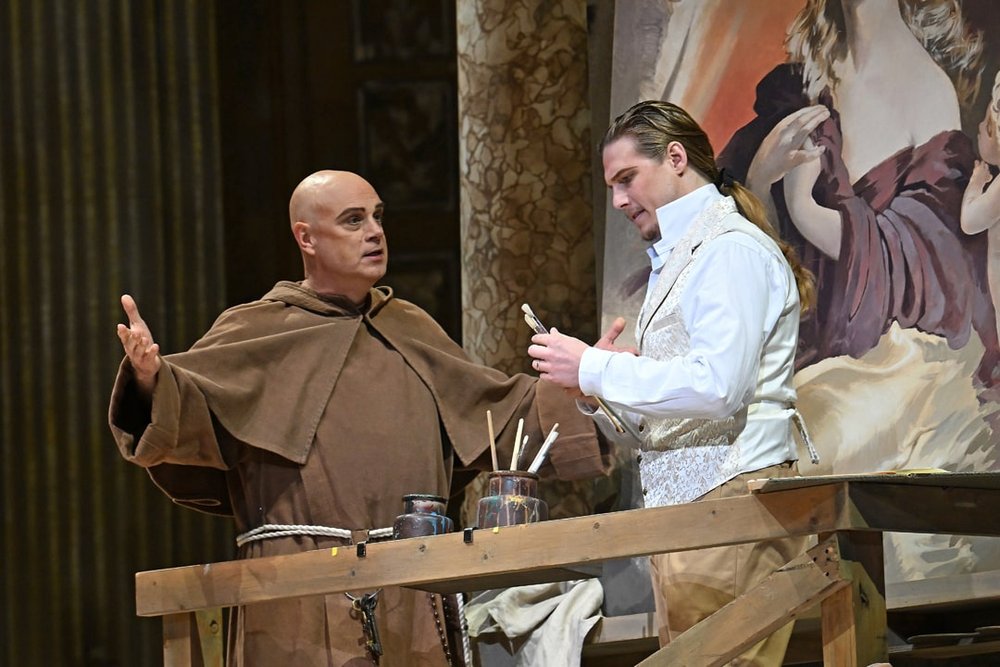
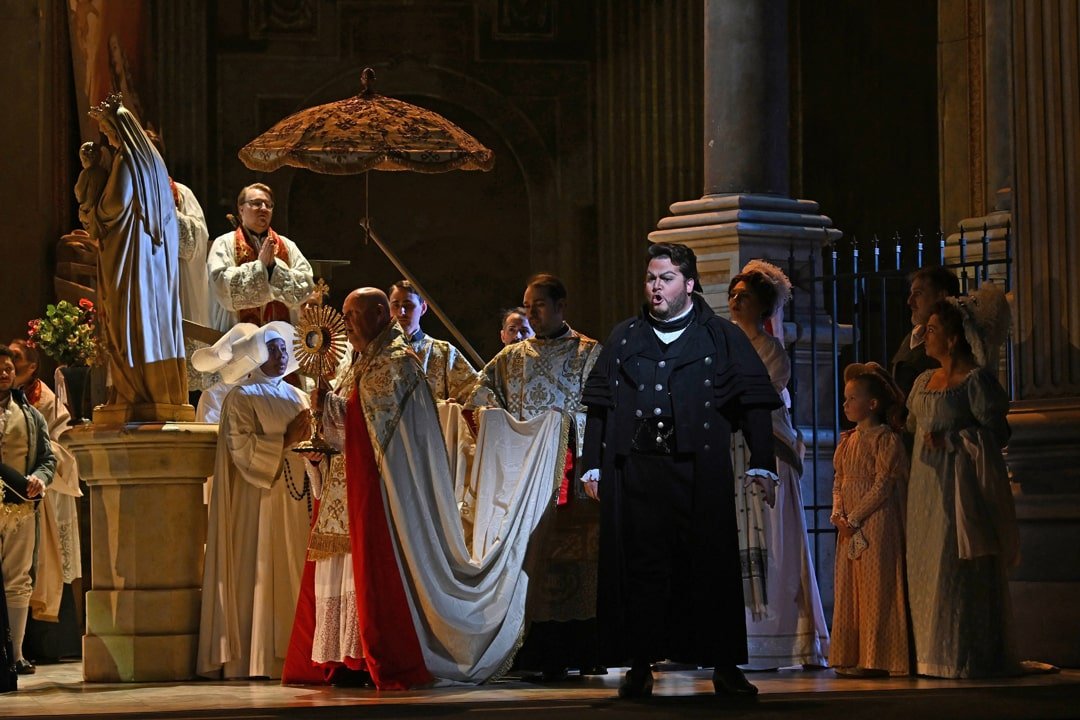
ACT II (Scarpia’s chamber): Scarpia desires Tosca and hopes to use the arrest of her lover to force her to his will. As he dines in his room, he hears Tosca’s voice rising from the celebrations below. Spoletta arrives from Cavaradosi’s villa, having failed to find the escaped Angelotti. He has, however, arrested Cavaradossi and brings him before Scarpia.
Tosca, having been to the villa as well, knows that Scarpia was lying about Cavaradossi’s infidelity. She also knows the hiding place of Angelotti, which she reveals when Mario screams under torture. Scarpia proposes a bargain to Tosca — if she will yield to him, he will spare Cavaradossi and give them both safe conduct out of Rome; but for political reasons, he first must hold a mock execution on Cavaradossi. Tosca agrees, and as Scarpia prepares to collect his reward, she stabs him to death.
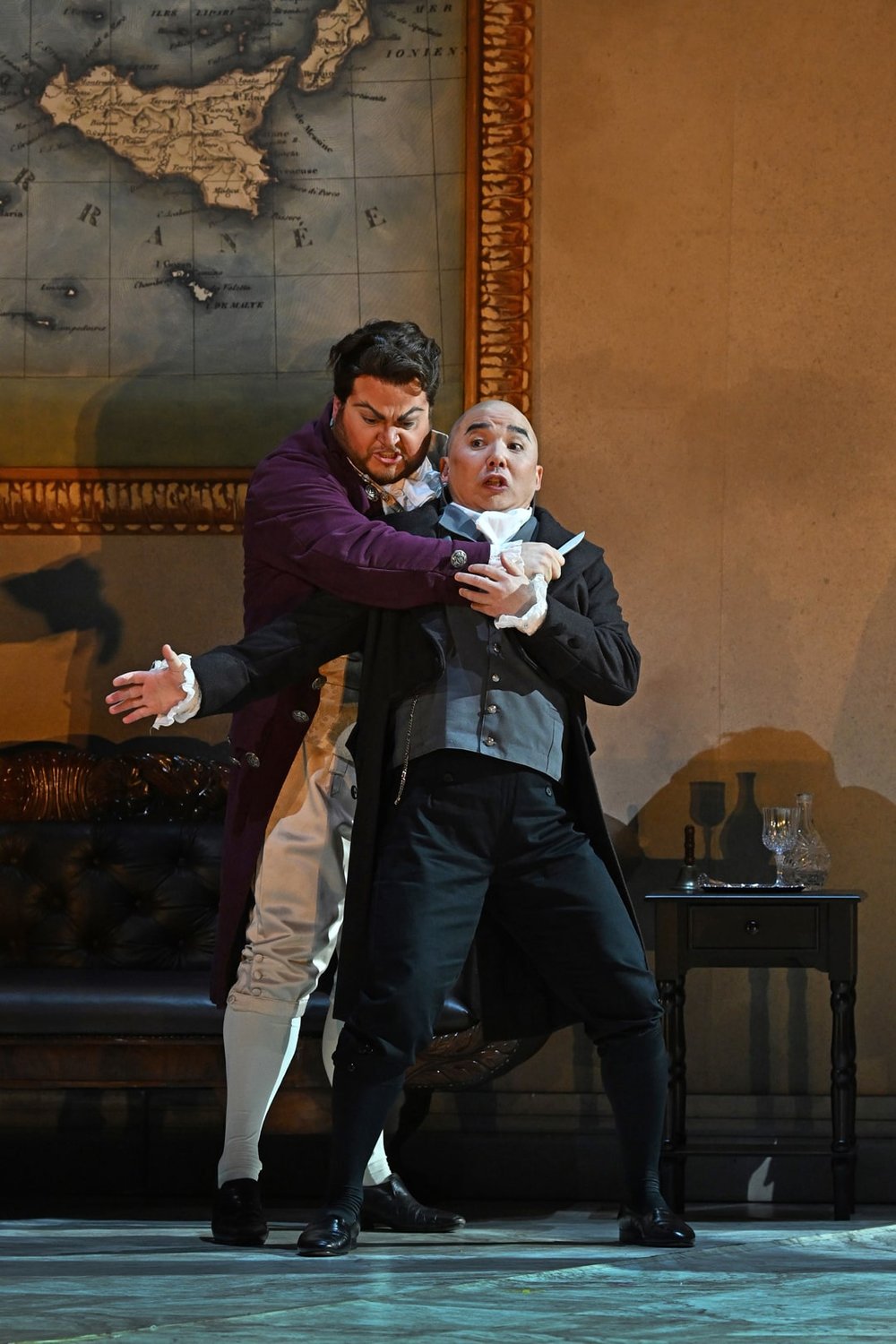
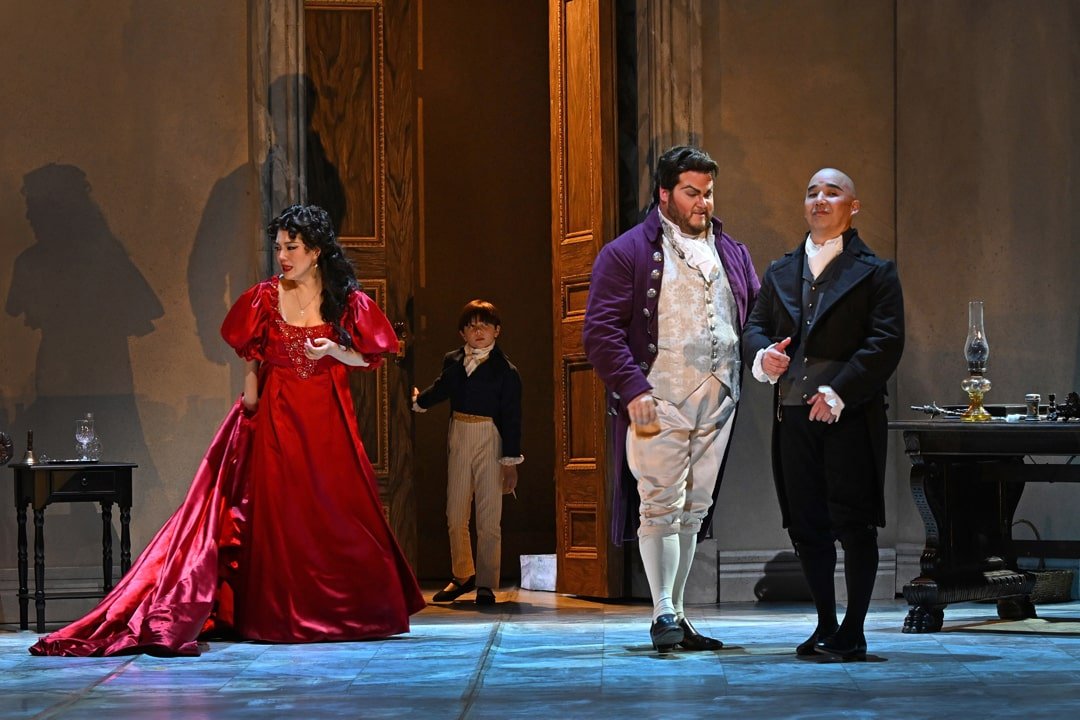
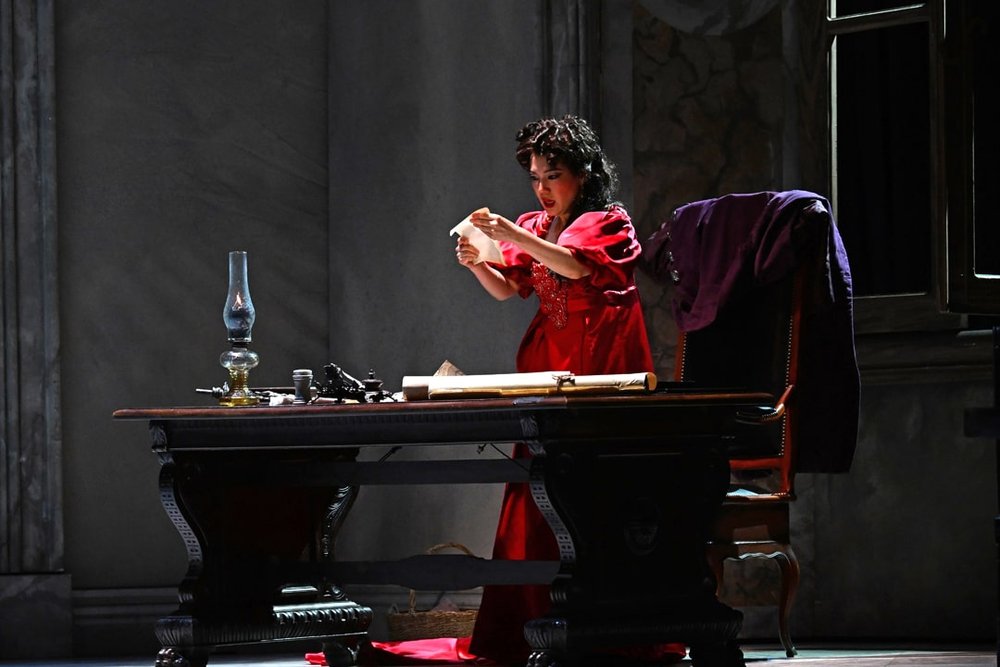
ACT III (the castle): At the battlements of Castel Sant’ Angelo, Cavaradossi, awaiting execution, recalls his first night with Tosca. Tosca arrives with the safe-conduct travel document from the dead Scarpia, and describes how she obtained it to Cavaradossi. A carriage is waiting, and she has brought money and her jewels. She explains that Cavaradossi will have to feign death at the hands of a mock firing squad, and coaches him on his acting.
The firing squad, however, is real; Scarpia has worked his evil from beyond the grave by betraying her. Pursued by Scarpia’s minions, who have discovered her deed, Tosca calls on her tormentor to meet her before God, and leaps to her death.
 NYC GAL OUT ♡ Pod
Leave a comment